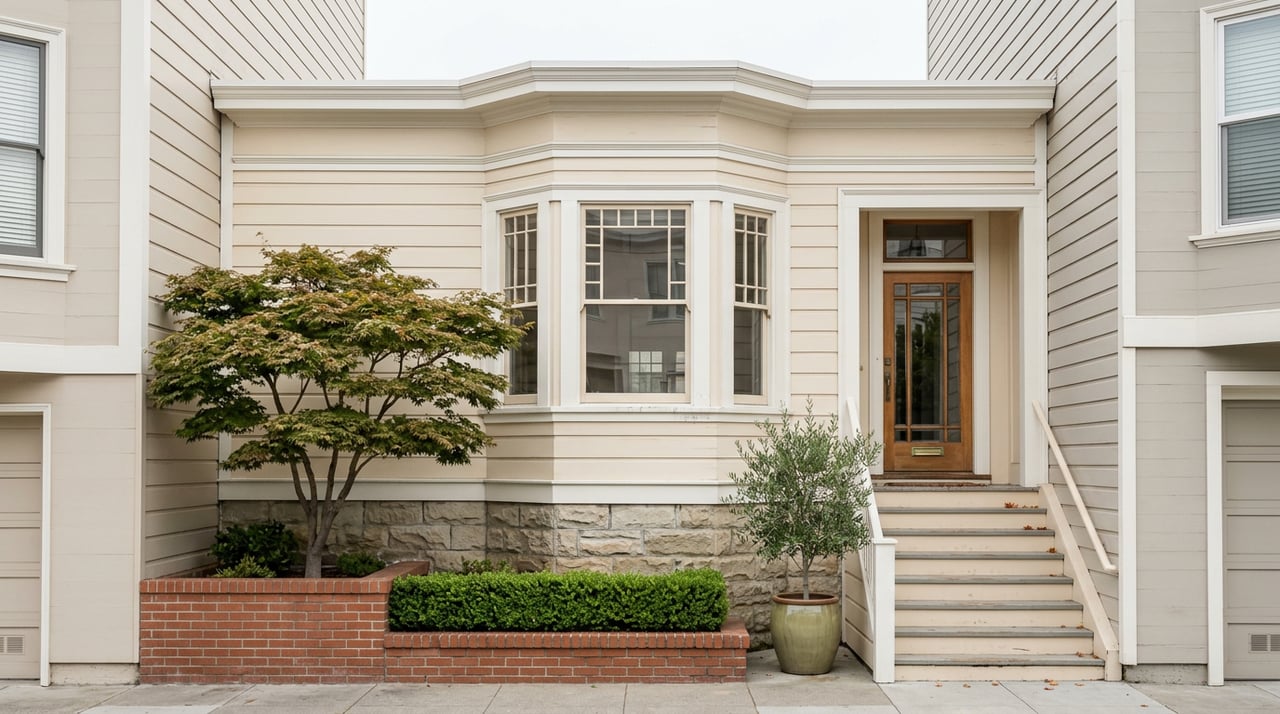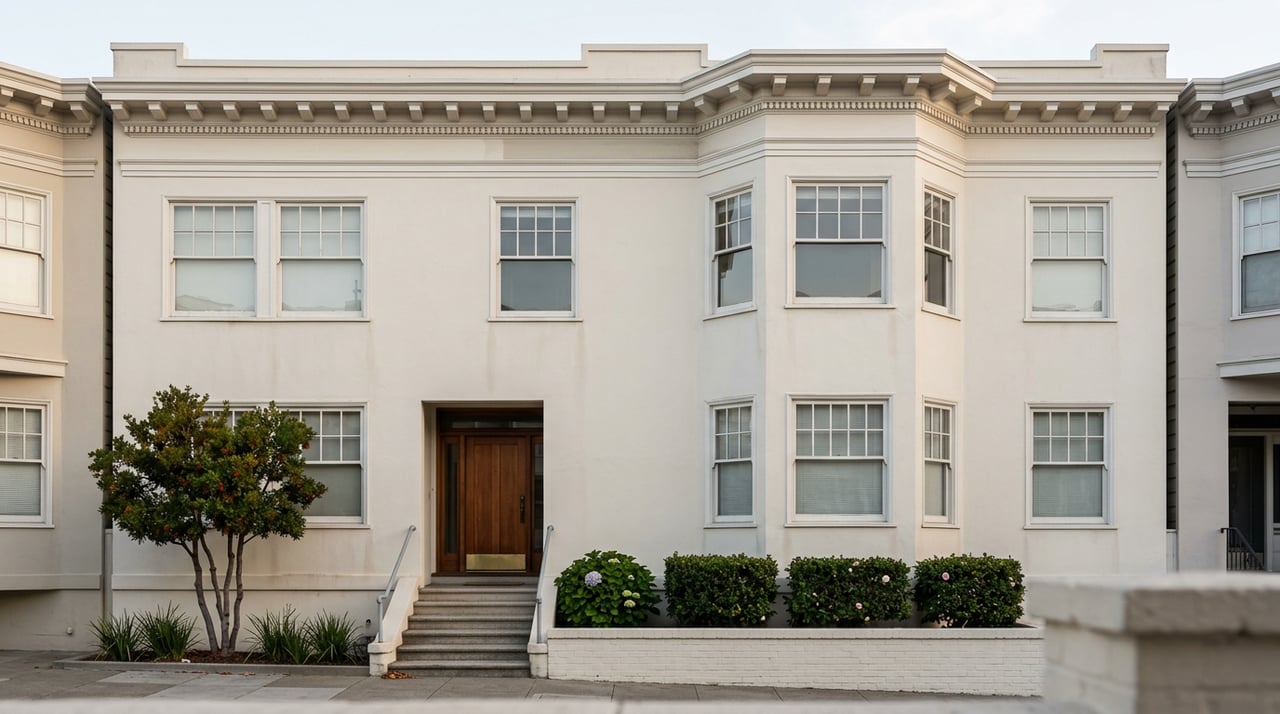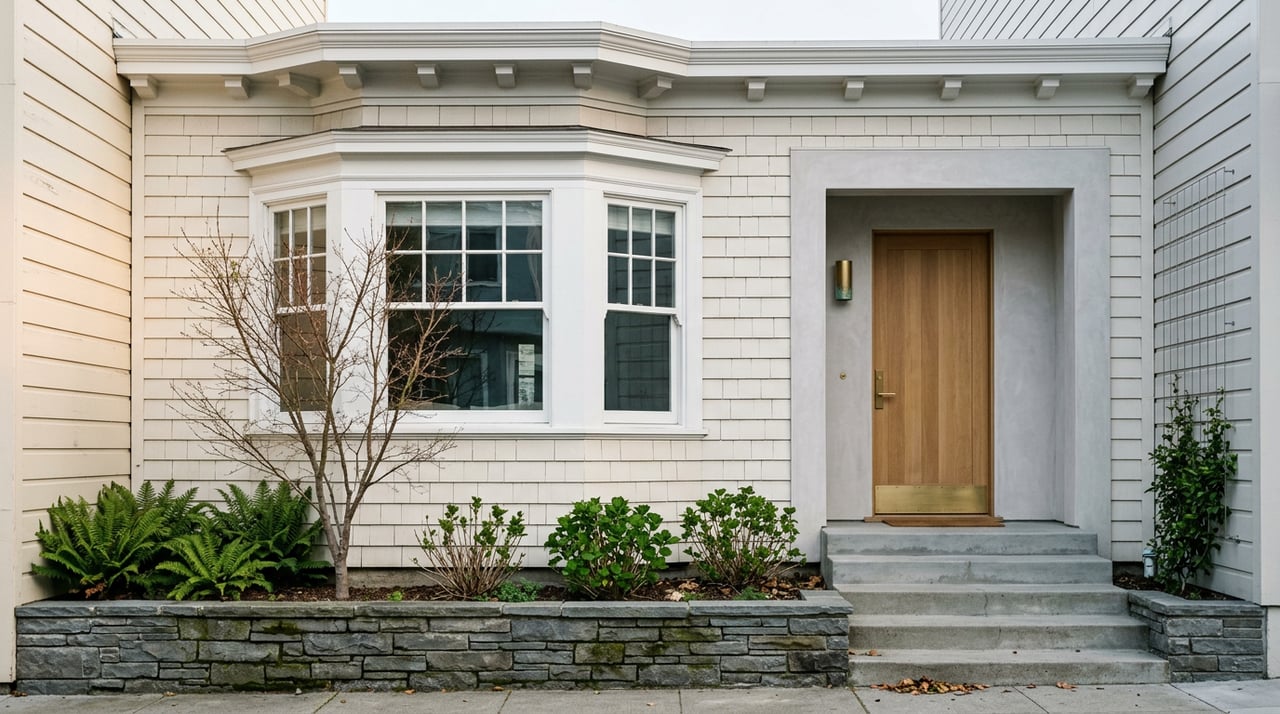
On July 22, a four-bedroom on Pacific Avenue closed for $12 million after being listed at $7.5 million. Six offers, one month on market, a new bar at 60 percent over asking. Three blocks away, 2830 Pacific Avenue told a different story: listed in April 2025, it sat for nearly a year and then closed this past April for its full $27.5 million asking price, with no discount.
Same neighborhood, same quarter, opposite mechanics. If you have been reading medians on the portals and thinking you understand Pacific Heights, those two sales are the whole point. The median is one number laid over four different markets, and the overbid heat is not where you think it is.
The median hides four markets stacked on one ridge
Pacific Heights runs from Van Ness to Divisadero, Broadway to California. Inside that rectangle sit at least four distinct submarkets, and they price, absorb, and negotiate on different clocks.
| Submarket | Typical price band (2026) | How it behaves |
|---|---|---|
| South-of-California condos | ~$1.3M to $2.5M | Denser multi-unit stock, different buyer pool, comp selection has to stay block-by-block |
| Large Pacific Avenue condos | ~$2M to $4M+ | 2,000 to 2,500 sq ft units that function as single-family substitutes |
| Family-scale single-family, $3M–$6M | $3M to $6M | Fastest tier in the neighborhood; strongest overbid pressure |
| Trophy tier | $7.5M to $30M+ | Longer holds, quieter marketing, significant off-market activity |
The 12-month median that gets quoted in citywide roundups put Pacific Heights at $7.6 million among houses, up 25.62% year over year. That is a real number and a misleading one. It reflects a top slice most buyers will never touch. Redfin's three-month window through May 2026 gives a very different read: a median of $2.4M across all home types, up 24.6% year over year, with 93 homes sold in May and 13 median days on market. Both are correct. Neither describes the actual house you are trying to buy.
Where the overbid actually lives
The most useful stat we found this cycle is a tier breakdown that the portals do not publish. In the $3M to $6M range, homes sell in about 10 days with buyers paying nearly 7% over asking on average. Compare that to homes under $1.5 million, which take closer to 19 days and sell right around list price. Across the neighborhood, 53% of sales are closing above asking, up from 36% the year before.
Read that again. The bidding war is concentrated in the family-scale tier, not the trophy tier. A $4.5 million listing today has more offer pressure on it than a $9 million listing on the same block. If you are shopping between $3M and $6M, plan for a competitive process. If you are shopping above $7.5M, plan for patience and access.
The condo that behaves like a house
The single most underrated piece of Pacific Heights inventory is the large condo. Pacific Heights happens to have an unusually large share of bigger condos, 2,000 to 2,500 square feet, that function more like single-family homes. When buyers priced out of single-family homes go looking for a substitute, Pacific Heights condos are the closest match.
This is why the neighborhood's price-per-square-foot gap between property types is narrower than the sticker prices suggest. Single-family homes go for about $1,671 a square foot, roughly a third more than condos at $1,241, and both move in about 12 days. A 2,200 square foot condo on Pacific Avenue with a garage, private outdoor space, and a view corridor competes directly with a modest Edwardian six blocks south. On the same buyer pool, at a real discount, without the roof and foundation exposure.
Why the "cheaper" entry point isn't as cheap as the sticker
Condos look like the easy answer. The carrying costs are where the math tightens.
- HOA dues in the towers. In buildings like Lumina or the St. Regis, HOA dues in 2026 range from $1,200 to $3,500+ per month, covering 24/7 security, master insurance, earthquake coverage, water, trash, and amenities.
- SB 326 balcony inspections. Between 2019 and 2024, San Francisco HOA fees rose roughly 26% due to skyrocketing insurance premiums and new state laws like SB 326 requiring regular balcony inspections. Older converted period buildings on Pacific Avenue are absorbing this cost right now, and it shows up in special assessments.
- Insurance on the single-family side. Homeowners are facing 40% premium hikes, with many carriers leaving California and leaving owners to rely on the California FAIR Plan, which can be significantly more expensive.
- Deferred maintenance reality check. Financial planners recommend setting aside 1% to 3% of a home's value annually for maintenance. On a $2.5M home in Pacific Heights, that is $25,000 to $75,000 per year.
The net effect: the SFR premium over a comparable large condo is real, but it is smaller than the PPSF gap implies once you carry the house for a decade. That is a different conversation than "condos are cheaper." It is the conversation to have before writing an offer.
Co-ops are the friction most buyers do not see coming
Co-ops are the exception. Only 19 sold this past year, and it took over a month on average, more than triple the pace of everything else. That's less about weak demand and more about how few people are looking to buy into a co-op board in the first place.
If a listing you love is in a co-op, the transaction is a different animal. Board approval, financial disclosures beyond a standard loan file, and the possibility of a rejection all live inside a longer timeline. This is one of the specific frictions worth flagging before you are three weeks into due diligence.
The trophy tier plays by different clocks
At the top of the market, headline stats mislead in the other direction. The luxury lane can be even quieter. Local reporting notes that some of the largest Pacific Heights trades occur off market, so headline stats may understate top-tier activity. Access to that segment runs on relationships, not MLS alerts. And the 2830 Pacific example above is instructive: a full-price close after eleven months is not a slow market, it is a patient one. Sellers at that tier are not discounting to move product. They are waiting for the specific buyer.
The corollary for buyers: at $7.5M and up, do not expect to bid a property up 60% the way 3140 Pacific Avenue went. That was a specific buyer with a specific reason. It is not the neighborhood's default behavior above the family-scale band.
How to actually read a comp set here
Two rules we apply on every Pacific Heights CMA:
- Price by micro-market, not by median. Build the CMA around the same block, park face, and product type, using 6 to 12 months of comps. Thin sales can make monthly medians misleading.
- Segment by band. Track sales by bands, such as under 2 million, 2 to 5 million, and over 5 million, and compare days on market and price per square foot within each band. That approach helps you price or bid confidently without chasing a noisy monthly median.
Inventory context, as of the most recent Houzeo snapshot: just 0.86 months of supply and a sale-to-list ratio of 105.38. That is the backdrop, not the strategy.
FAQ
Is the condo route a real substitute for a single-family home in Pacific Heights? For 2,000+ square foot condos on Pacific Avenue and the neighborhood's southern edge, functionally yes, once you underwrite HOA dues, reserve studies, and any pending balcony or facade work. For a 1,100 square foot two-bedroom, no. Product size is what makes the substitute real.
Should I wait for prices to soften? The neighborhood's structural inventory is thin and view-anchored, and the family-scale tier is where competition is highest. Waiting is a strategy that has not paid the buyers who tried it in 2025 or the first half of 2026. That does not make it wrong, only expensive so far.
How do I get in front of an off-market listing above $7.5M? Through an agent whose relationships pre-date the listing. The trophy pool moves quietly, and the price you see on the closed comp is often the second or third price a buyer at that tier considered.
Work with an advisor who prices by block, not by median
Pacific Heights rewards precision. The difference between a smart offer and an expensive one usually lives in the comp set you built before you wrote the number. Amanda Jones Advisory works with buyers and sellers who want that level of preparation, from micro-market pricing and Compass Concierge-backed presale improvements to disciplined handling of condo, co-op, and multi-unit transactions. Book a private consultation when you are ready to look at the neighborhood one block at a time.