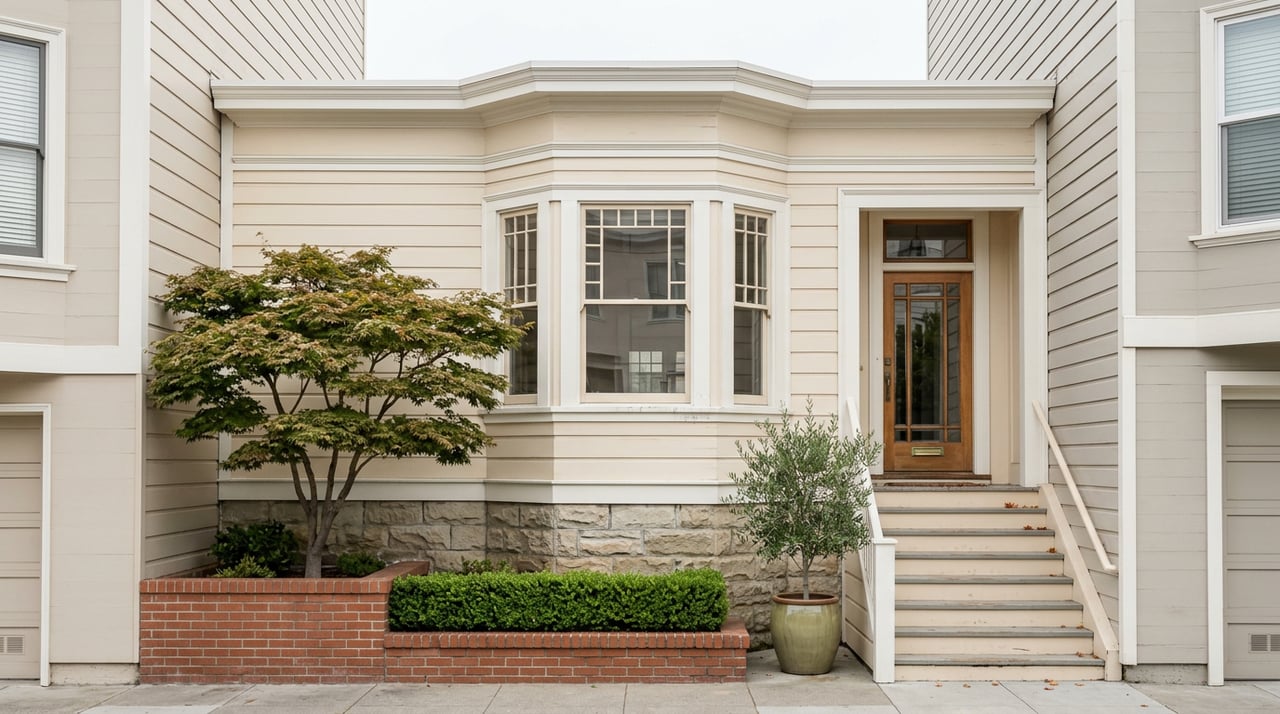
A seller in the Inner Richmond called her plumber last spring to schedule a routine service call. By the end of it, she had a quote for a $6,000 camera inspection and a warning that she couldn't close escrow on her Edwardian flat near Cabrillo Street without a sewer lateral compliance certificate. She called her agent in a panic. The certificate, as it turns out, doesn't exist. Not in San Francisco.
That single phone call captures something worth unpacking for anyone selling a home in this neighborhood. San Francisco has no point-of-sale sewer lateral requirement at all, which puts it in a different category from several of its Bay Area neighbors. But the absence of a certificate doesn't mean the pipe stops mattering. It just means nobody is forcing you to look at it before a buyer's inspector does, and that timing gap is where sellers actually lose money.
The certificate that doesn't exist
San Francisco's Public Utilities Commission publishes clear guidance on who owns what when it comes to sewer laterals. The property owner owns the entire lateral, from the building out to the city's main line, including the upper section (sometimes called the building sewer), the vent, and the trap. Under most circumstances, SFPUC handles repair or replacement of the lower section, the part that runs from the curb to the main, at no extra cost, once a licensed plumber's inspection flags a structural problem and the owner reports it through SF311.
Nowhere in that guidance is a certificate you need before you can sell. No inspection is mandated. No remodel permit triggers a lateral review. That surprises people, because plenty of Bay Area cities work differently. South San Francisco adopted a point-of-sale ordinance effective June 21, 2022, requiring sellers to obtain a sewer lateral compliance certificate before title transfers, with the certificate valid for 25 years once issued. Several other Peninsula cities run comparable programs. San Francisco simply isn't one of them.
Here's the comparison, stripped down to what actually governs a closing:
| Jurisdiction | Certificate required to sell? | What triggers it |
|---|---|---|
| San Francisco | No | Nothing at point of sale; SFPUC recommends periodic voluntary inspection |
| South San Francisco | Yes | Any transfer of title, per ordinance effective June 2022 |
| Several other Peninsula cities | Yes, in most cases | Point of sale, sometimes remodel permits over a set dollar threshold |
If you've heard from a friend who sold a house in South San Francisco, San Mateo, or across the bay in Oakland or Berkeley that they had to get a lateral certified before closing, they're not wrong. Their city just isn't San Francisco.
Why the confusion keeps spreading
Some of it is simple geography. The rules genuinely differ block by block once you cross a city line, and plumbing companies that work across county lines have every reason to describe the strictest version of the rule they've encountered, because that version sells more inspections. A few plumbing marketing pages state outright that San Francisco's Richmond and Sunset Districts require compliance certificates at sale. They don't. No ordinance singles out any San Francisco neighborhood, and SFPUC's own published guidance treats the whole city the same way: no certificate, no mandatory inspection.
None of that makes the underlying concern fake. It just means the actual risk here isn't a missing government form. It's a hundred-year-old pipe nobody has looked at.
What actually matters on these blocks
Inner Richmond's housing stock skews old in a specific way that's relevant here. Much of the neighborhood traces back to roughly 1913 through 1940, with the area's median year built landing around 1925 according to San Francisco Planning Department data, and a large share of the building stock sits in two-to-four-unit Edwardian and Victorian flats rather than detached single-family homes. That combination, older construction and shared multi-unit plumbing systems, means original vitrified clay laterals are common rather than rare.
Clay laterals from that era were built in short jointed sections. A century of tree roots, ground settling, and ordinary seismic movement works against every joint. None of that requires a certificate to be true. It just means that when a buyer's inspector runs a camera down the line during due diligence, which happens routinely regardless of any city mandate, there's a real chance something shows up.
The ownership split matters here too. You're responsible for the upper lateral, building to curb, including the vent and trap. If a problem sits on the lower lateral, curb to main, SFPUC typically repairs or replaces that section once you report a structural defect through SF311, usually at no cost to you. Knowing which half of the line has the problem is the difference between a call to 311 and a bill from your own contractor.
The timing problem nobody plans for
Because San Francisco doesn't require an inspection before listing, most sellers never get one until a buyer asks for it, if they ask for it at all. That's the part that costs money. A defect found during a buyer's inspection, three weeks into escrow, with a close date already scheduled, becomes a negotiation you're having under someone else's deadline. You're choosing between a credit, a rushed repair with whatever contractor happens to be available, or a price reduction, and you're choosing fast.
The same defect found before you list is a decision you get to make on your own schedule. Repair it, price around it, or disclose it plainly and let the market account for it. Any of those beats discovering it with your buyer's inspector standing in the basement.
If you're preparing to sell an Edwardian or Victorian property in this neighborhood, a few things are worth doing before the sign goes up:
- Order a camera inspection of the full lateral, building to main, from a licensed plumber. This isn't required by any ordinance, but it converts an unknown into a known while you still control the timeline.
- Ask the plumber to identify which section, upper or lower, any defect sits in. That determines whether the repair is yours to arrange or something SFPUC handles through a 311 report.
- If the building is a multi-unit property or part of a tenancy-in-common, loop in your co-owners early. A shared lateral means a shared decision, and TIC agreements often specify how those costs get split.
- Keep the inspection report and any repair documentation with your disclosure packet. There's no certificate to file with the city, but a clean camera pass or a documented repair is exactly the kind of proof a buyer's agent finds reassuring during their own diligence.
A few questions that come up
Does this apply to condos or TIC units the same way it applies to single-family homes? The ownership principle is the same, the building owns its lateral out to the main, but in a multi-unit or TIC building, that lateral is often shared. Decisions about inspection and repair usually need to involve the full ownership group, and TIC agreements frequently spell out how those costs are divided.
If my inspector finds root intrusion or a cracked joint, am I required to fix it before selling? There's no city mandate forcing a fix before you can close. Sellers still carry the general obligation to disclose known material defects, the same as with a roof or a foundation issue, and buyers routinely negotiate around whatever a lateral inspection turns up.
Who pays if the defect is on the city's side of the property line? If a licensed plumber's inspection finds a structural problem in the lower lateral, curb to main, reporting it through SF311 typically gets SFPUC to repair or replace that section at no cost to the owner, under most circumstances.
Where this leaves you
There's no form to chase and no certificate to file. What there is, on blocks full of century-old Edwardian flats, is a pipe worth looking at before someone else looks at it for you. That's a preparation decision, not a compliance one, and it's the kind of detail that separates a listing that closes cleanly from one that gets renegotiated in week three.
If you're weighing when to list a property in Inner Richmond, or thinking through how a shared lateral fits into a TIC sale, Amanda Jones Advisory coordinates this kind of pre-listing groundwork alongside the design and staging work that gets a property ready to compete. Book a private consultation to talk through your specific building and timeline before you put a sign in the yard.